


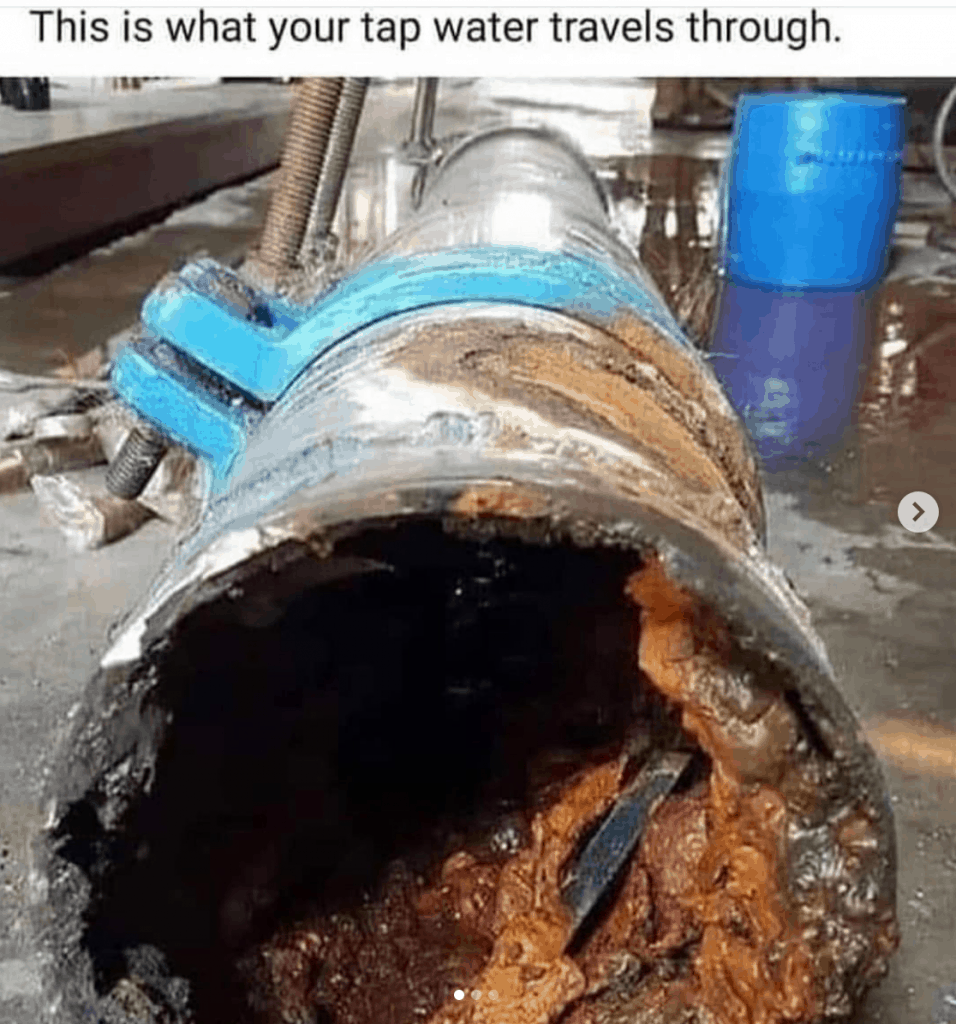
Water quality can be affected by the distribution network as well as treatment at the waterworks. The image on the right shows water pipes in Kadriorg.

Good drinking-water quality is important to public health and everyday wellbeing.
Drinking-water standards evolve as scientific knowledge develops. This article looks at PFAS, hexavalent chromium and phthalates, and why current monitoring information matters.
The original article raised questions about monitoring these substances in Estonia. Regulations have since changed: EU drinking-water PFAS limits and harmonised monitoring requirements became applicable on 12 January 2026. Use current supplier results and guidance when assessing your water.
What are these substances, and why are they discussed in relation to water quality?
PFAS: persistent substances in the environment
Per- and polyfluoroalkyl substances, or PFAS, are a large group of synthetic chemicals. Their strong carbon–fluorine bonds help explain their persistence, and contamination of water and soil can be difficult to address.
PFAS have been used in a wide range of industrial and consumer applications, including coatings, packaging and firefighting foams. Their environmental persistence and the health concerns associated with some members of the group have led to increased monitoring and restrictions. (1)
PFAS and the immune system
Researchers have examined links between PFAS exposure and immune responses. The effects depend on the substance and exposure; this does not allow a household filter to be presented as protection against COVID-19. (2)
Potential effects on pregnancy and development are also areas of research and regulatory attention. Exposure should be assessed using reliable monitoring data and current public-health guidance. (3)
Hexavalent chromium
Hexavalent chromium is a hazardous form of chromium. Concerns raised by US studies should not be treated as measurements of an individual Estonian water supply; local test results are needed for that assessment.
Chromium exists in different forms. Trivalent and hexavalent chromium have different properties, and hexavalent chromium can enter the environment through industrial pollution as well as natural sources.
Inhalation of hexavalent chromium is an established occupational concern. Findings about inhalation should be distinguished from the assessment of drinking-water exposure.
Possible health effects depend on the route, level and duration of exposure. Consult current public-health guidance if testing identifies a concern.
Animal studies have examined the effects of hexavalent chromium in drinking water. Results from these studies require careful interpretation and are not a direct prediction of an individual person’s outcome. (4)
Evidence on cancer and other effects is evaluated by public-health and regulatory bodies. Broad lists of possible conditions do not establish the risk from a particular tap. (5)
Phthalates and exposure
Phthalates are a group of chemicals used, among other applications, to make certain plastics more flexible. Some are subject to restrictions because of concerns about their effects on health and the environment.
Restrictions on some phthalates in toys illustrate why the identity of the chemical and the way people are exposed both matter.
Researchers have investigated effects on development, reproduction and other health outcomes. These findings should be considered for the particular substance and exposure rather than applied equally to all products or water supplies. (6)