

We think carefully about what we eat. What we drink deserves attention too.
You use water every day, and its quality matters for drinking, cooking and everyday comfort.
Depending on the source, water may contain naturally occurring substances or residues from the surrounding environment. Treatment should address the substances relevant to your supply.
Long-term health is affected by many factors. Water quality is one area to consider, alongside diet, lifestyle and the wider environment.
It is not possible to attribute a health condition to drinking water without appropriate evidence about the exposure and the condition.
We generally rely on regulated drinking-water supplies. To understand your own water, look at the quality standards and your supplier’s monitoring results. If you have a specific concern, a suitable laboratory test can help establish whether treatment is needed.
Water quality has been studied extensively. The significance of a contaminant depends on its identity, concentration and exposure, rather than whether the water looks clear.
Our aim is to explain water-treatment choices and help you make an informed decision for your home.
Water in and around us
Water is part of daily life: we drink it, cook with it and wash with it. Its familiarity can make it easy to overlook questions about source, taste and treatment.
Around 60% of the adult human body is water.
Water supports normal physiological processes, cellular function, metabolism and the removal of waste products.
Poor drinking-water quality can be associated with health risks, depending on the substances present, their concentrations and the length of exposure.
Researcher Dr Gerald Pollack has explored water’s role in biological systems. Such research should be read in context rather than used to promise individual improvements from a household filter.
Does filtering water help?
It can help when the treatment matches the problem. Carbon filters, filter jugs and reverse osmosis systems work differently. Check the performance of a specific system for the substances you want to reduce.
Reverse osmosis is widely used to reduce dissolved substances. Depending on the system, treatment may address chlorine, disinfection by-products, certain organic compounds and other unwanted substances.
Reverse osmosis also reduces naturally occurring minerals such as calcium and magnesium.
Minerals are obtained from food as well as water. Individual requirements and the overall diet should be considered when choosing a drinking-water system.
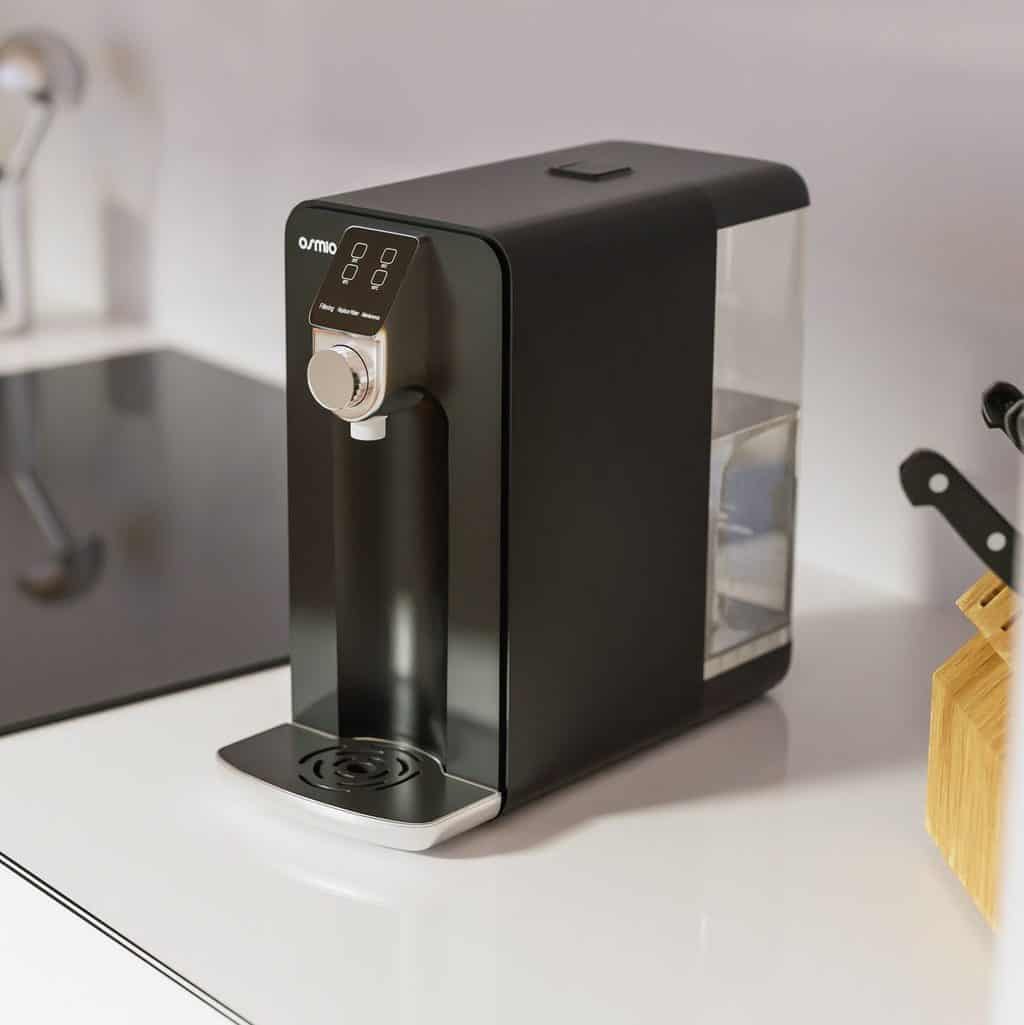
Osmio Zero also includes a remineralisation filter, which adds minerals back after reverse osmosis.
A change in taste may be noticeable after switching to appropriately filtered water.
Experiences vary with the original water quality and personal preferences. A filter should not be regarded as a treatment for a health condition.
Explore Osmio Zero if you are looking for a compact, portable water purifier that needs no plumbing installation.